







Infection Control in Healthcare Facilities: Protocols to Reduce Cross-Contamination
23 May 2026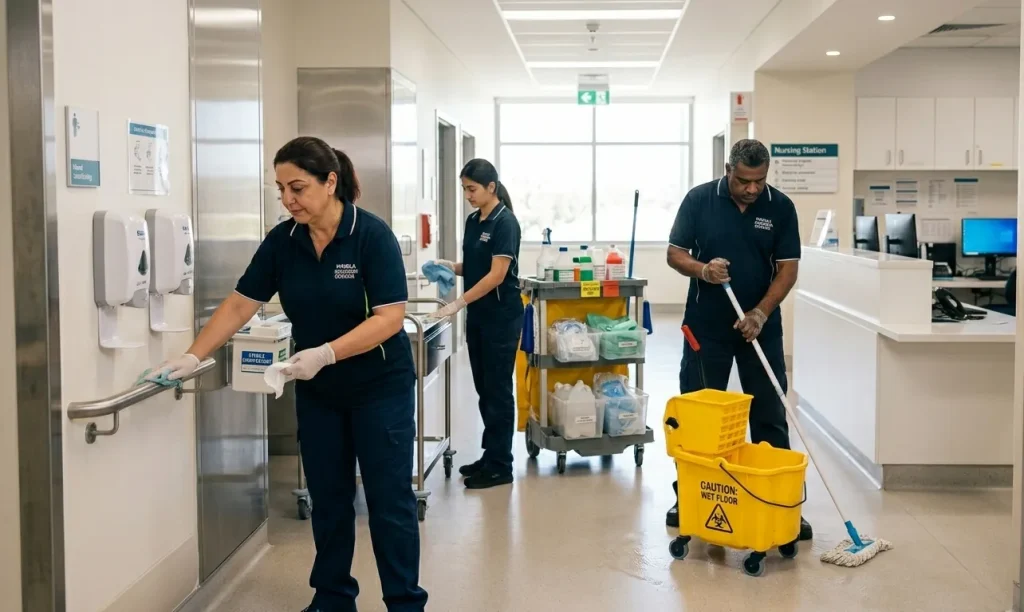
Healthcare environments require structured systems to maintain hygiene across high-risk areas. Infection control in healthcare facilities depends on consistent cleaning execution that reduces contamination during daily operations. Practical protocols support safer clinical environments without disrupting essential services.
Standardised Cleaning Procedures in Melbourne Healthcare Settings
Healthcare facilities in Melbourne follow strict hygiene requirements due to regulatory expectations and patient volume. Infection control in healthcare facilities requires documented procedures, scheduled cleaning cycles, and the correct use of approved disinfectants across all zones.
Cleaning tasks must be carried out in a defined sequence to prevent contamination spread between areas. Logical workflows, such as cleaning from low-risk to high-risk zones, support better hygiene outcomes and reduce the likelihood of cross-contact.
Infection Control in Healthcare Facilities: Control Protocols
Clear, repeatable cleaning protocols help maintain hygiene standards across healthcare environments. These actions support controlled and consistent cleaning outcomes:
- Zone-based cleaning sequence: Cleaning progresses from low-risk to high-risk areas in a controlled order, reducing the likelihood of transferring contaminants between clinical and non-clinical spaces.
- High-touch point scheduling: Frequently handled surfaces are cleaned at defined intervals throughout the day to limit microbial build-up and maintain consistent hygiene levels.
- Tool segregation systems: Colour-coded equipment is assigned to specific zones, ensuring tools are not reused across areas and helping minimise cross-contamination risks.
- Disinfectant dwell time adherence: Cleaning teams follow recommended contact times for disinfectants to ensure effective sanitation and proper elimination of pathogens on surfaces.
- Controlled waste movement: Waste is managed through designated pathways and sealed handling methods to reduce exposure risks during collection and disposal.
Maintaining Consistency Through Structured Systems
Reliable outcomes rely on consistent execution supported by trained personnel and clear procedures. Infection control in healthcare facilities depends on supervision, routine checks, and documentation that tracks cleaning performance across all areas.
Compliance with national standards supports safe and practical cleaning processes. At Ausbright Facilities, cleaning activities align with the NHMRC Australian Guidelines, ensuring procedures reflect current expectations without overstating clinical outcomes.
Healthcare sites require cleaning teams that understand operational flow and risk-sensitive areas. Our team at Ausbright Facilities follows structured protocols designed to support hygiene consistency across both clinical and support spaces.
Supporting Consistent Hygiene Outcomes in Healthcare
Structured cleaning protocols support safer environments and help reduce contamination risks in busy healthcare settings. Clear processes and trained teams contribute to consistent hygiene across all operational areas.
Ausbright Facilities supports infection control in healthcare facilities across Melbourne with cleaning systems tailored to healthcare settings. Our team focuses on consistent execution that aligns with site requirements and supports safer day-to-day operations.
Contact us to maintain consistent hygiene standards within your facility.
Related Blog Articles:
School Cleaning Standards: A Framework for Effective Maintenance Programs
Hospital Cleaning Services in Melbourne: Safe, Compliant & Equipment-Ready Solutions
Commercial Hygiene Services Supporting Pest Control in Workplace Environments
Hospital Cleaning Services in Melbourne: Safe, Compliant & Equipment-Ready Solutions
Optimized by: Netwizard SEO